
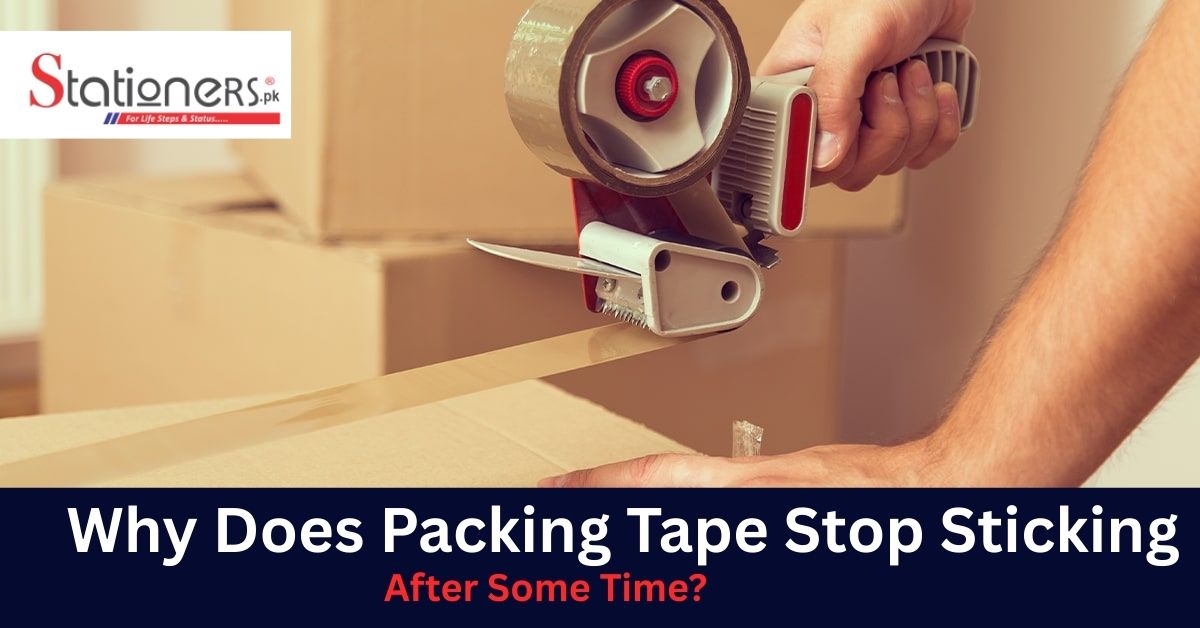
There is nothing more frustrating than sealing a box for storage or shipping, only to find the edges peeling up 48 hours later. In the professional world of logistics and home organization, this phenomenon is known as "adhesive failure." While most people assume the tape is simply "bad," the reality is often a complex interaction between chemistry, environmental factors, and application techniques.
In Pakistan, the problem is amplified by extreme weather. Whether you are a small business owner shipping products across the country or a student packing up a hostel room, understanding the mechanics of packing tapes is essential to ensure your belongings remain secure.
At stationers.pk, we see how the right knowledge can save businesses from costly damages. Here is the science behind why tape loses its grip and how you can prevent it.
The Role of Temperature and Humidity in Adhesive Failure
The primary reason tape stops sticking in regions like Sindh or Punjab is the fluctuations in temperature. Most commercial adhesives are "pressure-sensitive." In high heat, the adhesive can become too soft and "ooze," losing its structural integrity. Conversely, in cold weather, the adhesive can become brittle and "glassy," losing its ability to flow into the microscopic pores of the cardboard.
Humidity is an even bigger culprit in the packing industry. Cardboard is hygroscopic, meaning it absorbs moisture from the air. When the cardboard fibers swell with humidity, they can push the adhesive away from the surface. If you are applying tape in a humid warehouse or during the monsoon season, the moisture creates a barrier between the tape and the box, leading to eventual peeling.
Oxidation and the Lifespan of the Roll
Like many chemical compounds, adhesives react with oxygen over time. This process, called oxidation, changes the chemical structure of the glue. You may have noticed that an old roll of tape found in the back of a drawer feels "gummy" or leaves a yellow residue. This is a sign that the polymers have broken down.
Exposure to UV light also accelerates this degradation. If your sealed boxes are sitting near a window or in an open yard, the sunlight breaks the bonds of the adhesive. This is why professional-grade Industry Materials are often stored in cool, dark environments to preserve their shelf life. Once the "tack" is gone due to chemical aging, no amount of pressure will make the tape stick again.
Surface Energy and Contamination Issues
Sometimes the failure isn't with the tape, but with the box itself. Modern recycled cardboard often has "low surface energy." This means the fibers are shorter and sometimes coated with a slight oily residue from the recycling process. Adhesives struggle to "wet out" on these surfaces.
Furthermore, microscopic dust is the enemy of adhesion. In industrial areas of Pakistan, fine dust particles can settle on the box surface before the tape is applied. The adhesive sticks to the dust rather than the cardboard, creating a weak bond that eventually fails under the tension of the box flaps. Always wiping the surface with a dry cloth before sealing can significantly improve the longevity of the bond.
Application Tension: The "Snap-Back" Effect
A common mistake in the packaging process is stretching the tape too tightly during application. Because the film backing of the tape is slightly elastic, it wants to return to its original length. This is called "memory."
If you pull the tape with extreme force while sealing a box, the tape will slowly "pull back" from the ends over time. This constant tension eventually overcomes the strength of the adhesive, causing the ends to "flag" or pop up. The secret is to apply the tape with firm pressure to activate the adhesive, but without stretching the plastic film itself.
Frequently Asked Questions
How can I tell if my tape is still good to use?
Perform a "thumb test." Press your thumb firmly against the adhesive and pull it away. If it feels aggressive and leaves a slight stringing effect, it is still fresh. If it feels smooth or dry, the adhesive has likely oxidized.
Does the thickness of the tape matter for long-term sticking?
Yes. Thickness is measured in microns. Thicker tape usually has a heavier coating of adhesive, which allows it to "bite" deeper into the cardboard fibers, providing a more permanent bond for heavy-duty shipping.
Is clear tape better than brown tape?
Chemically, they are often similar (Acrylic or Hot Melt). The color is usually just for aesthetic or identification purposes. However, clear tape allows you to see if the adhesive has successfully made contact with the surface.
Can I revive old tape that has lost its stickiness?
Generally, no. Once the chemical bonds have broken down due to age or UV exposure, the adhesive is permanently altered. It is safer to replace the roll than to risk a box opening during transit.
What is the best way to store tape rolls?
Store your rolls flat in their original packaging, away from direct sunlight and extreme heat. A cupboard in a temperature-controlled room is ideal for maintaining the adhesive’s properties for up to a year.
Why does my tape stick to itself but not the box?
This usually indicates surface contamination on the box, such as dust or high moisture content. It could also mean the box has a wax coating that is incompatible with standard pressure-sensitive adhesives.