
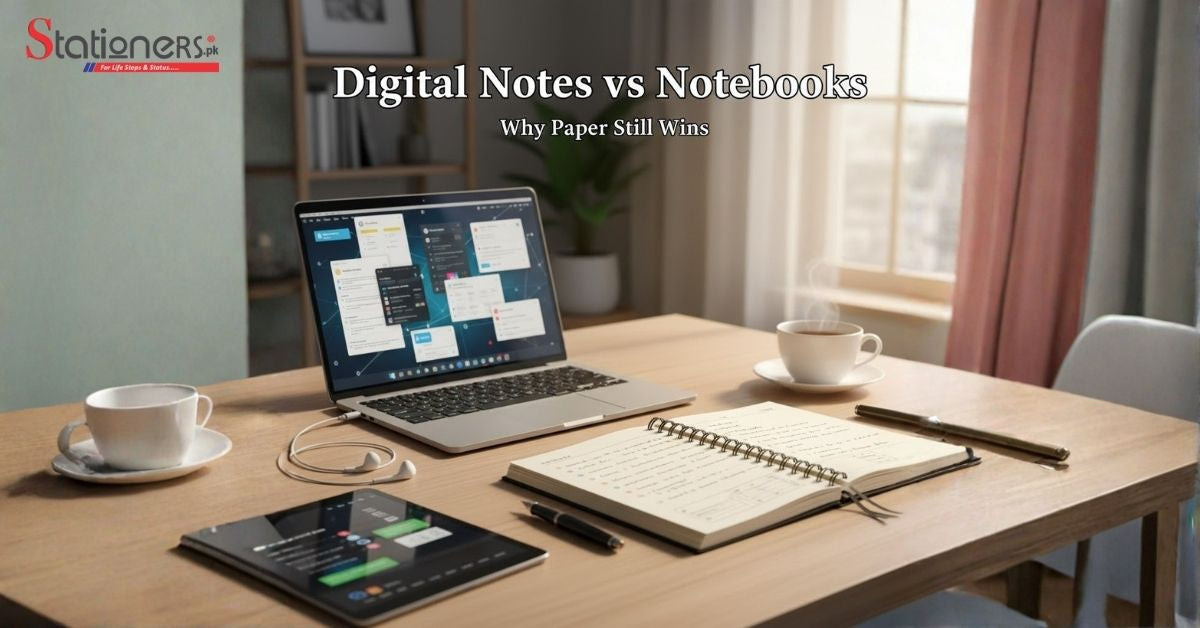
Digital tools have changed the way we store information. From note-taking apps to cloud-based planners, everything is designed to be faster and more accessible. Yet, despite this convenience, many students and professionals still feel overwhelmed, distracted, or disconnected from their own notes. This raises an important question: if digital notes are so advanced, why don’t they always work and why do notebooks still feel more effective in many situations?
The Problem With Digital Notes
Digital notes are efficient, but efficiency doesn’t always translate into clarity. Screens invite distractions. Notifications, open tabs, and constant switching between apps interrupt focus. Instead of helping people think, digital notes often become another task to manage.
Many users in Pakistan, especially students and working professionals experience “note overload.” Notes are saved, synced, and forgotten. The ease of typing makes it tempting to write everything without processing it properly, which weakens understanding and memory.
How Writing by Hand Changes the Brain
When you write in a notebook, your brain works differently. Handwriting forces you to slow down, summarize ideas, and process information more deeply. This active engagement improves recall and understanding, especially during studying or planning.
This is why many learners still prefer physical notebooks for lectures, revision, and brainstorming. Writing things down by hand creates a stronger mental connection than typing ever does.
When Notebooks Do Better Than Apps
Notebooks shine in moments that require focus, reflection, or creativity. Planning a week, outlining ideas, journaling thoughts, or revising for exams often feels more natural on paper. There are no alerts, no pop-ups, and no temptation to switch tasks.
This is why people continue to rely on Journals & Notebook as everyday tools not out of habit, but because they genuinely help reduce mental clutter and improve clarity.
The Role of Aesthetics in Staying Consistent
Another reason digital notes fail is lack of emotional connection. Screens feel the same every day. On the other hand, notebooks, especially visually appealing ones, create motivation. When stationery feels personal and enjoyable, people are more likely to use it consistently.
This is where cute stationery plays an important role. Colorful designs, thoughtful layouts, and aesthetic details make writing feel less like a chore and more like a habit people enjoy maintaining.
Why Many People Use Both Digital and Paper Together
This isn’t about choosing one over the other. Many people find balance by using digital tools for storage and reminders, while relying on notebooks for thinking, learning, and planning. Paper becomes the space where ideas are shaped before being stored digitally.
As this balance grows, people often look for guidance on choosing the right stationery. That’s why readers frequently search for clarity on topics like where to buy cute stationery in Pakistan, especially when they want tools that support focus rather than distraction.
Conclusion
Digital notes are convenient, but they don’t always support deep thinking, focus, or memory. Notebooks continue to work because they slow us down, remove distractions, and help us process ideas more meaningfully. In a fast-paced, screen-heavy world, writing on paper remains one of the simplest ways to regain clarity.
Understanding when to use digital tools and when to rely on notebooks helps people study better, plan smarter, and think more clearly.
FAQs
Why don’t digital notes always work effectively?
Digital notes often fail because screens introduce distractions such as notifications, app switching, and information overload, which can interrupt focus and weaken understanding.
Are handwritten notes better than digital notes for learning?
Yes. Writing by hand helps the brain process information more deeply, improving memory, comprehension, and recall compared to typing.
Why do notebooks help with focus and clarity?
Notebooks remove digital distractions and encourage slower, intentional thinking, making them ideal for planning, studying, and reflection.
Do students and professionals still use notebooks in Pakistan?
Yes. Many students and professionals in Pakistan continue to rely on notebooks for lectures, meetings, brainstorming, and exam preparation because they support better concentration.
How does stationery design affect consistency in note-taking?
Visually appealing stationery creates an emotional connection, making people more motivated to write regularly and maintain consistent habits.
Is it better to use both digital notes and notebooks together?
Yes. Many people use digital tools for storage and reminders while using notebooks for thinking, learning, and organizing ideas more clearly.