
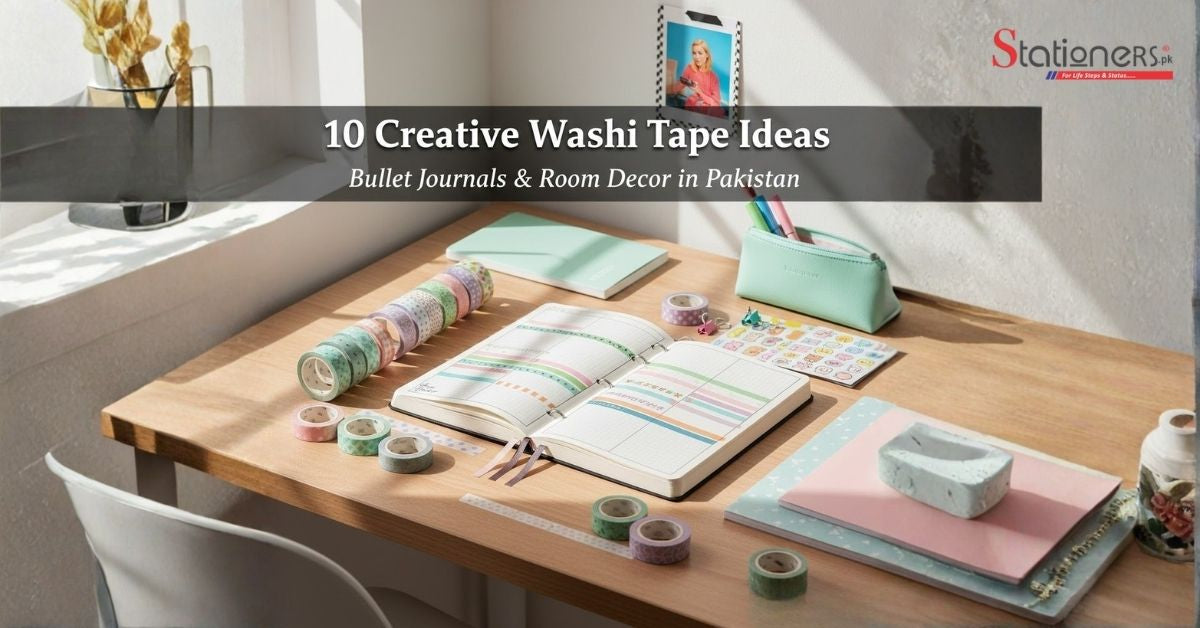
Washi tape has transformed from a simple Japanese paper tape into a staple of the Pakistani creative community. Whether you are a student trying to organize a heavy semester load or someone looking to add a personal touch to a rented bedroom, these versatile rolls of adhesive art offer endless possibilities. Because they are repositionable and leave no residue, they are particularly suited for the DIY culture in Pakistan, where making the most of available resources is a way of life.
At stationers.pk, we see how a single roll of patterned tape can bridge the gap between functionality and aesthetic appeal. If you have a drawer full of rolls and aren't sure where to start, here are ten practical and inspiring ways to use them for your journals and living spaces.
1. Defining Your Weekly Layouts
For many, a journals notebook is the nerve center of daily productivity. Instead of using permanent markers that might bleed through the pages, use thin washi strips to divide your daily columns. This not only adds a splash of color but also allows you to change your layout mid-week if your schedule shifts. In Pakistan, where academic and social calendars can be unpredictable, this flexibility is a game-changer for staying organized.
2. Creating Custom Page Tabs
Finding a specific month or a particular set of notes in a thick journal can be frustrating. You can create DIY index tabs by folding a small piece of tape over the edge of the page. By color-coding these tabs, perhaps blue for exams, pink for personal goals, and green for expenses you turn a standard notebook into a highly efficient filing system.
3. The "No-Nail" Photo Wall
Living in a hostel or a rented apartment often means you can't drill holes into the walls. Washi tape is the perfect solution for creating a gallery wall of memories. You can frame your favorite polaroids or printed photos directly on the wall using patterned borders. It creates a high-end "aesthetic" look without risking your security deposit, making it a favorite for students across the country.
4. Personalizing School Supplies
In a crowded classroom or office, it is easy for pens and scales to go missing. A quick wrap of a unique Washi Tapes pattern around your stationery items serves as a stylish "name tag." This subtle customization ensures your tools always find their way back to you while giving your pencil case a cohesive, curated look.
5. Laptop and Tech Decoration
Our tech devices often look identical and sterile. You can customize your laptop cover or even your charger cables with heat-resistant paper tapes. This doesn't just look good; it helps family members or roommates distinguish between similar-looking chargers in a shared living room. It’s an easy way to bring a bit of personality to the tools you use for hours every day.
6. Mood Tracking and Habit Grids
Visualizing progress is key to building new habits. Many journalers use small snips of tape to fill in habit trackers. Instead of coloring in a box, placing a tiny square of floral or geometric tape feels like a mini-reward for completing a task. This tactile experience makes the process of self-improvement feel more like a creative hobby than a chore.
7. Transforming Boring Switch Plates
Standard white light switches can look dated. A few strips of aesthetic tape can turn a functional household item into a piece of decor. Because the tape is made of paper, it is easy to trim around the edges for a clean, professional finish. When you want a change, simply peel it off and try a new pattern to match your room’s evolving theme.
8. Color-Coding Your Academic Year
For students in Pakistan preparing for board exams or university entrance tests, the volume of study material can be overwhelming. Using different patterns of tape to mark the edges of chapters in your textbooks makes "active recall" much easier. You can instantly flip to the section you need, saving precious time during intense revision sessions.
9. DIY Gift Wrapping
Buying expensive gift wrap for every occasion isn't always practical. You can take plain brown parcel paper or even simple white paper and "draw" ribbons and bows using colorful tapes. It looks intentional, handcrafted, and shows the recipient that you put genuine effort into their gift. This approach is both eco-friendly and budget-conscious.
10. Organizing Your Workspace Cables
With routers, lamps, and chargers, the area under a desk often becomes a tangled mess. Wrap a small piece of tape around the end of each cord and write its purpose (e.g., "Printer," "Laptop," "Lamp"). This simple act of organization reduces daily friction and keeps your workspace feeling calm and focused.
If you are looking for more inspiration on where to find the best materials for these projects, knowing where to buy cute stationery can help you build a collection that lasts. Investing in cute stationery isn't just about the items themselves; it's about creating an environment that inspires you to do your best work.
Frequently Asked Questions
Does washi tape damage walls?
No, high-quality washi tape is designed with a low-tack adhesive. It can be removed from most surfaces, including painted walls and paper, without leaving a sticky residue or peeling the paint.
Can I write on washi tape?
Yes, since most washi tapes are made from traditional Japanese paper (fibers from the gampi tree or bamboo), you can write on them with permanent markers or even some ballpoint pens.
Is washi tape waterproof?
Washi tape is water-resistant but not fully waterproof. It can handle a light damp wipe, but it shouldn't be used on items that will be submerged in water or left outdoors.
How long does washi tape last on decor?
On indoor surfaces like walls or furniture, it can stay in place for years. However, its "repositionable" nature means you can change it whenever you feel like refreshing your room's look.
Where is the best place to store my tape collection?
To keep the adhesive fresh, store your tapes in a cool, dry place away from direct sunlight, which can cause the colors to fade over time.